

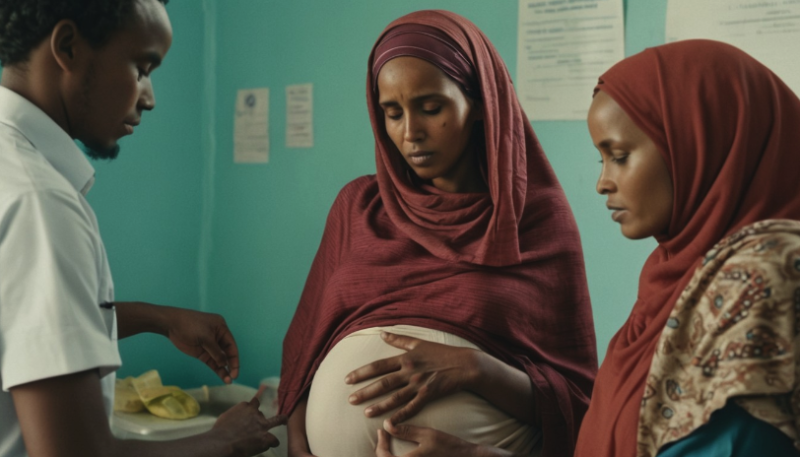
In the tumultuous landscape of Somalia’s healthcare sector, marred by decades of conflict, poverty, and limited infrastructure, the integration of artificial intelligence (AI) and technology emerges as a beacon of hope. With the potential to enhance diagnostics, treatment, and access to healthcare services, these innovative solutions offer tangible benefits to the most vulnerable segments of society. Let’s delve deeper into the proposed technology solutions, backed by data and real-world examples, to understand their potential impact on the daily lives of Somali citizens.
The Healthcare Landscape: Challenges and Opportunities
Somalia grapples with significant healthcare challenges, underscored by inadequate infrastructure, limited access to trained medical professionals, and high disease burden. According to the World Health Organization (WHO), Somalia has one of the highest maternal mortality rates globally, with approximately 732 maternal deaths per 100,000 live births. Moreover, infectious diseases such as malaria, tuberculosis, and cholera remain prevalent, further straining an already fragile healthcare system.
AI-Powered Diagnostics: A Game-Changer in Early Detection
AI-driven diagnostic tools hold immense promise in enabling early detection and timely intervention. For instance, Malaria Consortium’s “Remote Monitoring and Diagnostic System” utilizes AI algorithms to analyze images of malaria parasites obtained through smartphone cameras. This innovative approach enables community health workers to conduct rapid malaria tests in remote areas, leading to earlier diagnosis and treatment initiation. In regions where access to laboratory facilities is limited, such solutions have the potential to reduce morbidity and mortality rates associated with preventable diseases significantly.
Telemedicine: Bridging the Gap in Access to Care
Telemedicine platforms represent a transformative solution for bridging geographical barriers and expanding access to healthcare services. In Kenya, the “Linda Jamii” initiative utilizes mobile technology to provide teleconsultations with healthcare providers, particularly benefiting individuals in rural and underserved areas. According to a study published in the Journal of Telemedicine and Telecare, telemedicine interventions have been associated with improved healthcare outcomes, reduced healthcare costs, and increased patient satisfaction levels. By leveraging existing mobile infrastructure, Somalia can replicate and adapt similar models to address its healthcare access challenges effectively.

AI-Driven Treatment Recommendations: Personalized Healthcare Delivery
AI-powered treatment recommendation systems offer personalized healthcare solutions tailored to individual patient needs. IBM’s Watson for Oncology, for instance, utilizes AI algorithms to analyze patient data and medical literature, providing oncologists with evidence-based treatment recommendations. In resource-constrained settings like Somalia, where access to specialized medical expertise is limited, such solutions empower healthcare providers to deliver high-quality, individualized care to patients. By optimizing treatment decisions and minimizing trial-and-error approaches, AI-driven recommendations can improve patient outcomes and reduce healthcare costs over time.
Mobile Health Applications: Empowering Self-Care and Prevention
Mobile health (mHealth) applications play a pivotal role in empowering individuals to take control of their health and well-being. In Ghana, the “M-Tiba” platform allows users to access healthcare services, make payments, and receive medication reminders via mobile phones. Studies have shown that mHealth interventions contribute to increased health knowledge, improved treatment adherence, and better management of chronic conditions. By providing accessible and user-friendly health information and services, mHealth applications have the potential to revolutionize healthcare delivery in Somalia, particularly among marginalized populations with limited access to traditional healthcare facilities.
Success Stories and Lessons Learned from Africa
Across the African continent, several success stories underscore the transformative impact of AI and technology on healthcare delivery:
- Rwanda’s “Rwanda Health Information Exchange” facilitates the exchange of electronic health records, enabling seamless coordination of care and improved patient outcomes.
- Ghana’s “National Health Insurance Scheme” leverages mobile technology to enable electronic claims processing and reduce administrative burdens on healthcare providers.
- Kenya’s “Mobile Telemedicine Project” utilizes teleconsultations to provide specialist care to patients in remote areas, improving access to specialized medical services.
A Call to Action for Sustainable Healthcare Transformation
In conclusion, the integration of AI and technology offers unprecedented opportunities to revolutionize healthcare delivery in Somalia. By leveraging innovative solutions such as AI-powered diagnostics, telemedicine platforms, and mobile health applications, Somalia can overcome existing healthcare challenges and improve access, quality, and affordability of care for all citizens. However, realizing this vision requires concerted efforts from the government, healthcare stakeholders, technology companies, and international partners.
To ensure the long-term success and sustainability of AI and technology-driven healthcare solutions in Somalia, the following steps are imperative:
- Investment in Infrastructure: Enhance access to reliable internet connectivity and electricity to support the deployment and scalability of technology solutions.
- Capacity Building: Provide training and education programs to enhance digital literacy among healthcare providers and the general population.
- Regulatory Frameworks: Develop and enforce regulations to safeguard patient data privacy and ensure the ethical use of AI in healthcare.
- Community Engagement: Engage communities in designing and implementing healthcare interventions, ensuring that solutions are culturally appropriate and address local needs.
With strategic planning, investment, and collaboration, Somalia can embark on a transformative journey toward building a resilient, inclusive, and sustainable healthcare system that meets the needs of its diverse population. The time for action is now – let us seize the opportunity to harness the power of AI and technology for the betterment of healthcare in Somalia and beyond.
.
